Does a Barrel Sauna Add Value to Your Home on a Budget?
A barrel sauna functions more like a hot tub or a fire pit in resale terms than like a finished bathroom: it can make a listing stand out and appeal to buyers who value outdoor wellness amenities, but appraisers generally do not assign it a specific line-item dollar value. For a homeowner working with a tight budget who plans to actually use it for years, a compact barrel model is usually the most cost-effective way to add a permanent outdoor amenity, and its durable, self-draining curved design tends to hold up well enough to still look good whenever the home eventually sells.
How Appraisers Actually Treat a Backyard Sauna
Formal appraisals lean heavily on comparable sales and standard categories like bedroom count, bathroom count, and finished square footage. A barrel sauna does not fit neatly into any of those categories, so it rarely shows up as its own line item the way a finished basement or an added bathroom would. What it can do is function similarly to a pool, hot tub, or outdoor kitchen: a feature that helps a home compete for buyer attention in listing photos and showings, even if it does not move the appraised number directly.
Buyer Perception Varies by Region and Market
In colder climates and in markets with an established wellness or outdoor recreation culture, a barrel sauna reads as a meaningful, on-trend amenity that buyers actively search for. In other markets, it may come across as a niche feature that appeals to a smaller slice of buyers, similar to how a home theater or a wine cellar appeals strongly to some buyers and not at all to others. Sellers in a strong sauna market can reasonably expect it to help with showings and buyer interest even without a specific appraised dollar bump.
Why the Barrel Shape Specifically Holds Up Over Time
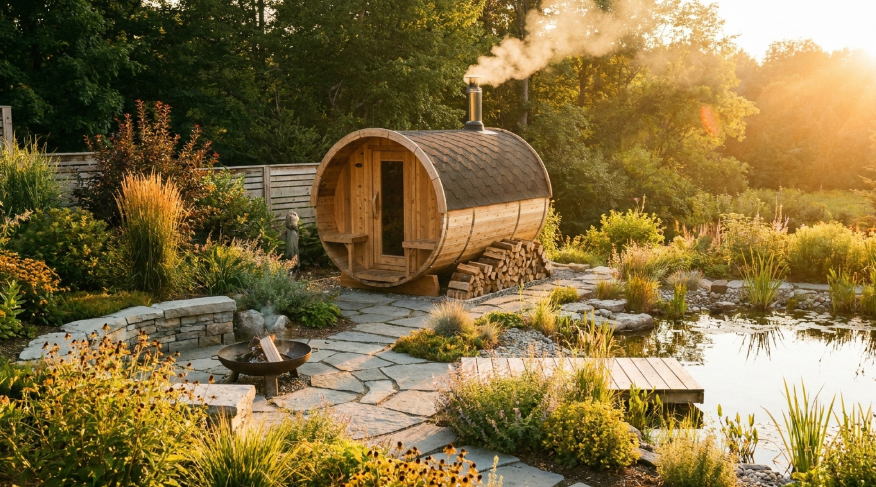
Part of what makes a barrel sauna a reasonable long-term addition, budget-conscious or not, is how well the design itself resists weather damage. The curved roof has no flat area for rain or snow to pool on, so water runs off continuously rather than sitting and slowly working into seams the way it can on a flat-roofed structure. The cradle base elevates the barrel off the ground, which allows airflow underneath the staves and reduces the ground moisture exposure that causes rot in less elevated outdoor structures. A well-built barrel sauna that has been properly maintained can still look presentable a decade or more later, which matters directly for how it shows at resale.
Budget Comparison: Barrel vs Custom Cabin
A compact barrel sauna is typically the lower-cost entry point into a permanent backyard sauna compared with a custom-built square cabin, since the pre-engineered curved stave design and standard diameters keep manufacturing and kit costs down relative to a fully custom build. For a homeowner trying to add a wellness amenity without a large construction budget, a smaller barrel model, like a compact 4-person unit, delivers most of the same daily-use value and much of the same resale-adjacent curb appeal as a larger, pricier structure.
What Actually Drives Perceived Value at Resale
Condition matters more than size for how a barrel sauna is perceived by a potential buyer walking the property. A smaller, well-maintained unit with fresh sealant and tight staves reads as a cared-for amenity, while a larger but neglected structure with visible weathering can actually work against a listing rather than for it. Placement matters too: a barrel sauna positioned to be visible and accessible from the main living space or patio tends to register more strongly with buyers than one tucked in an out-of-the-way corner of the yard. Buyers researching a specific compact model to understand diameter, capacity, and typical price range before budgeting a purchase can review the listing at sweatdecks.com for a 4-person barrel option sized for exactly this kind of budget-conscious backyard addition.
Permitting and Placement Considerations That Affect Value
Some jurisdictions require a permit for a permanent outdoor structure like a barrel sauna, particularly once it is set on a fixed pad rather than left as a movable structure. Handling this correctly protects value at resale, since an unpermitted structure can complicate a sale or trigger a removal request during buyer negotiations. Checking local rules before installation, including any setback requirements from property lines, is a small upfront step that avoids a bigger budget problem later.
How Photos and Listing Descriptions Affect Perceived Value
A barrel sauna that photographs well, clean staves, a fresh sealant coat, and a tidy surrounding area, does more work in a listing than the structure’s actual square footage would suggest, since it signals to a buyer scrolling photos that the outdoor space has been cared for generally. A listing description that names the sauna specifically, rather than lumping it into a vague “outdoor amenities” line, also tends to catch the attention of the exact buyer segment most likely to value it, which is a small but real factor in how quickly a home with this kind of feature moves.
When It Makes More Sense to Remove It Before Selling
Not every situation favors keeping the sauna in place through a sale. In a market where the feature reads as niche rather than desirable, or where the specific unit has fallen into poor condition that would cost more to restore than remove, some sellers are better off taking it down and listing the yard as a blank slate rather than letting a neglected structure work against the property’s overall impression. This is a case-by-case call based on local buyer expectations and the sauna’s actual condition, not a universal rule either way.
What Does the Research Say About the Wellness Angle Buyers Respond To?
Buyer interest in a sauna amenity is often tied to the same wellness associations found in the research literature, even if most buyers have not read the studies directly. A 2018 systematic review in Evidence-Based Complementary and Alternative Medicine and a 2023 review in Mayo Clinic Proceedings both describe cardiovascular associations tied to regular sauna bathing, and that broader cultural awareness of sauna benefits is part of why the amenity resonates with buyers in markets where wellness features are in demand. None of this research speaks to home value directly, but it helps explain why the amenity carries appeal beyond simple relaxation.
Frequently Asked Questions
Does a barrel sauna increase home resale value? It can function as a desirable amenity that helps a listing stand out, though appraisers rarely assign it a specific dollar value.
Is a barrel sauna a good investment on a tight budget? For an owner who will use it regularly, a compact barrel model is often the most budget-friendly permanent wellness amenity available.
Why does a barrel shape hold up better outdoors than a flat-roofed structure? The curved roof sheds water without pooling, and the elevated cradle base allows airflow that reduces moisture damage.
Does buyer perception of a barrel sauna vary by region? Yes, colder climates and wellness-focused markets tend to see it as a stronger amenity than other regions.
References
- Clinical Effects of Regular Dry Sauna Bathing: A Systematic Review, Evidence-Based Complementary and Alternative Medicine, 2018
- Does the Combination of Finnish Sauna Bathing and Other Lifestyle Factors Confer Additional Health Benefits? A Review of the Evidence, Mayo Clinic Proceedings, 2023
- Cardiovascular and Other Health Benefits of Sauna Bathing: A Review of the Evidence, Mayo Clinic Proceedings, 2018
By Colette Ashworth