
Complete Guide to Planning a Paver Patio (From Design to Installation)
Planning a paver patio starts with three essentials: define how you’ll use the space, calculate the correct size and materials, and prepare a stable base before installation. If you get those right—layout, measurements, and foundation—you avoid the most common problems like uneven settling, drainage issues, and wasted materials. Everything else, from pattern choice to edging, builds on those core decisions.
A well-built paver patio can last 25–50 years when installed correctly. That isn’t marketing language; it’s consistent with guidance from the Interlocking Concrete Pavement Institute (ICPI), which sets installation standards widely followed across North America. The difference between a patio that lasts decades and one that shifts after two winters usually comes down to planning—not the pavers themselves.
Let’s walk through the process step by step, the way a contractor would approach it on site.
Define the Purpose Before You Draw Anything
Before choosing materials or patterns, ask a simple question: What will this patio actually be used for?
- Small family seating area?
- Outdoor dining for 8–10 guests?
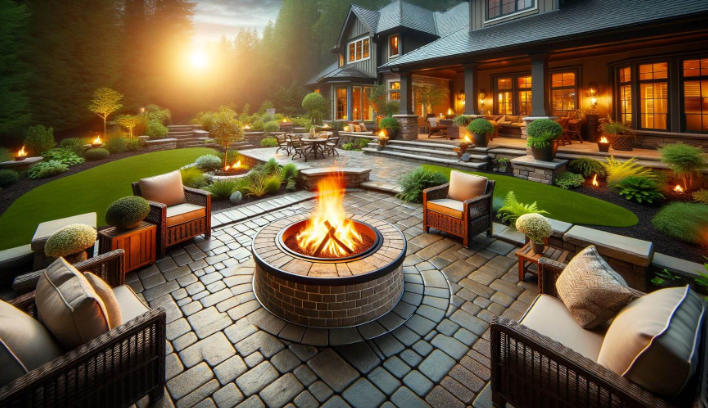
- Fire pit lounge?
- Outdoor kitchen?
In real situations, people underestimate space needs. A standard 6-person dining set requires about 12 × 14 feet for comfortable circulation. Add a grill or walkway, and that footprint expands quickly.
Sketch your yard. Mark trees, fences, utilities, and slope direction. Don’t skip this step. A quick drawing often reveals constraints you didn’t notice at first glance.
Determine Patio Size and Material Quantities
Once you know the function, calculate the footprint. Measure the length and width of the proposed area in feet. Multiply them to get square footage.
For example:
16 ft × 18 ft = 288 sq ft
Now account for:
- 5–10% extra pavers for cuts and breakage
- Base material (typically 4–6 inches compacted gravel)
- 1 inch of bedding sand
Material miscalculations are one of the biggest DIY budget overruns. According to data from HomeAdvisor, average paver patio installation costs range between $10–$25 per square foot installed, depending on region and materials. Ordering incorrectly affects that total fast.
If you want to avoid guesswork, using a helpful patio material estimator can simplify calculations for pavers, sand, and base aggregate. It’s especially useful when converting depth into cubic yards—something many homeowners miscalculate the first time.
Getting quantities right at this stage prevents mid-project delays and dye-lot mismatches.
Choose the Right Paver Type
Not all pavers perform the same. The three most common types:
Concrete Pavers
- Most popular option
- Durable and cost-effective
- Available in many colors and shapes
Brick Pavers
- Classic appearance
- Slightly higher cost
- Can fade over time
Natural Stone
- Premium aesthetic
- Irregular shapes
- Higher material and labor costs
Concrete pavers dominate residential projects because they balance durability and price. ICPI-certified installations typically rely on interlocking concrete systems for structural integrity.
If you’ve noticed patios that shift or separate, it’s rarely the paver’s fault. It’s usually the base.
See also: Level Up Your Lessons: Budget-Friendly Online Tools for Teachers
Evaluate Soil and Drainage Conditions
This step is often overlooked.
Clay-heavy soils expand and contract with moisture. Sandy soils drain well but may require stabilization. Before excavation, observe how water flows across your yard after heavy rain.
A patio should slope 1/8 to 1/4 inch per foot away from your house. That slight pitch prevents pooling and foundation damage.
The National Association of Home Builders emphasizes proper site grading as a key factor in preventing long-term structural issues in residential hardscapes.
Skipping slope planning leads to expensive corrections later.
Excavation and Base Preparation
Professional installers often say:
“The patio is only as good as the base beneath it.”
Here’s a general guideline:
- Excavate 7–9 inches below finished height
- Install 4–6 inches of compacted crushed stone (in layers)
- Add 1 inch of screeded bedding sand
Each gravel layer should be compacted with a plate compactor. Don’t rush this part. In real-world installs, insufficient compaction is the number one reason patios sink within a year.
For a 300 sq ft patio at 5 inches deep base:
300 sq ft × 0.42 ft ≈ 126 cubic feet
126 ÷ 27 ≈ 4.7 cubic yards of gravel
That’s more material than most people expect.
Layout, Pattern, and Edge Restraints
Once the base is prepared, dry-lay your pavers starting from a straight edge—often the house or a fixed border.
Common patterns:
- Running bond (simple, clean)
- Herringbone (strong interlock)
- Basketweave (decorative feel)
Herringbone patterns distribute weight better, which makes them ideal for driveways or high-traffic patios.
Install edge restraints around the perimeter before final compaction. Without them, lateral movement can cause spreading over time.
Cutting and Fitting Pavers
Edges require precise cuts. A masonry saw or angle grinder with a diamond blade works best.
Measure twice. Cut once.
You’ll likely use most of your extra 5–10% material allowance here. Curves and fire pit surrounds consume more cuts than straight lines.
Joint Sand and Final Compaction
After placing pavers:
- Spread polymeric sand over joints
- Sweep into gaps
- Compact the surface
- Mist lightly with water to activate binding agents
Polymeric sand hardens slightly, reducing weed growth and insect intrusion. It’s not foolproof, but it significantly improves durability.
Sealing: Necessary or Optional?
Sealing enhances color and resists stains, but it’s optional.
Pros:
- Color enhancement
- Stain resistance
- Easier cleaning
Cons:
- Added cost
- Requires reapplication every few years
In freeze-thaw climates, breathable sealers are safer to prevent trapped moisture.
Common Planning Mistakes to Avoid
- Underestimating base depth
- Ignoring drainage slope
- Forgetting material overage
- Skipping compaction between layers
- Choosing style over structural integrity
If you’ve ever seen a patio with uneven corners or sunken spots, these steps were likely rushed.
Cost Expectations and Budget Planning
Material-only costs (average ranges):
- Concrete pavers: $2–$6 per sq ft
- Base gravel: $30–$60 per cubic yard
- Bedding sand: $20–$40 per cubic yard
- Polymeric sand: $25–$40 per bag
For a 300 sq ft patio, DIY material costs often fall between $1,000–$2,000 depending on region and quality. Professional installation may double or triple that.
The planning stage largely determines where you land in that range.
Final Thoughts
A successful paver patio project isn’t complicated—but it is detail-sensitive. Measure carefully. Account for base depth. Plan drainage intentionally. Use reliable material estimates before ordering.
In my experience, homeowners who spend extra time on measurement and layout rarely regret it. Those who rush excavation usually do.
Build from the ground up—literally—and your patio won’t just look good this summer. It’ll still be level and solid years from now.